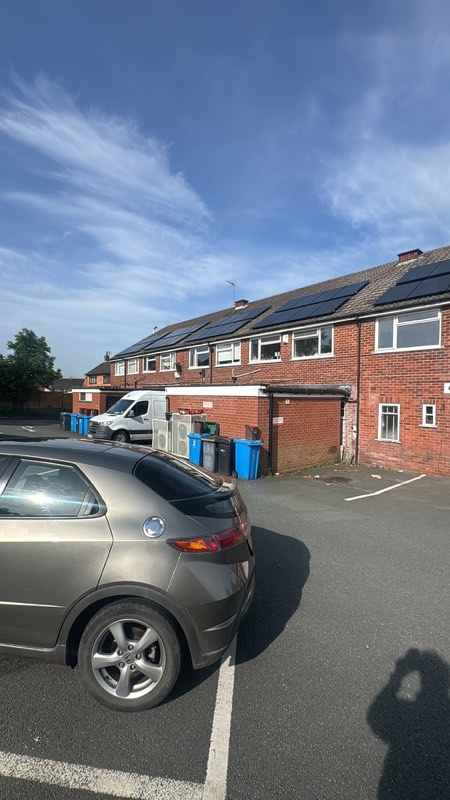
Same direction, same palette and type — only the photography changes. Three of Matt's four photos are portrait phone shots, which is why the landscape cards were showing half image and half empty blue. All three options below are built portrait-first.
A · Full-bleed. Each service gets the full width of the screen and most of its height. Photography is the section rather than an illustration inside it — no windows, no crops fighting the source. Strongest on a phone, where a full-height image is genuinely arresting. Costs the most vertical space, so the page gets longer.
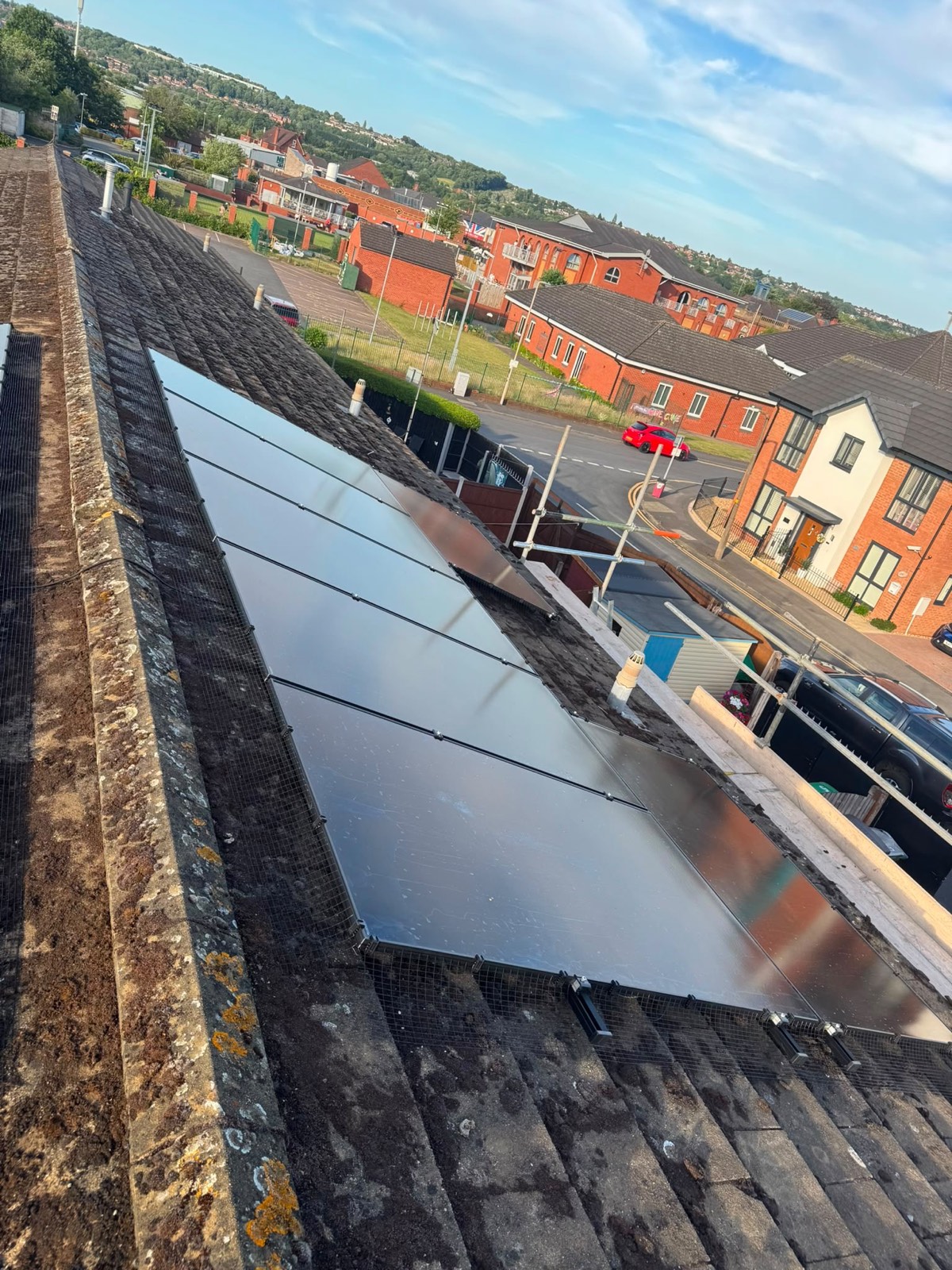
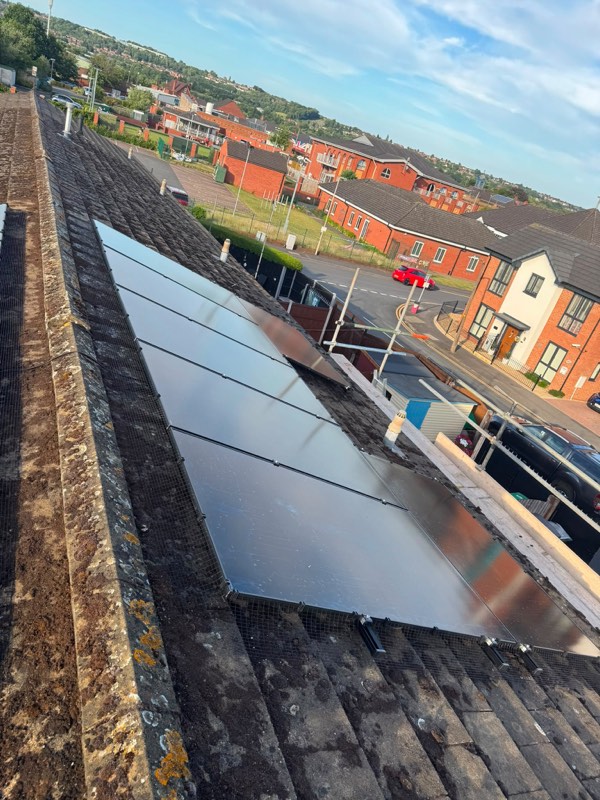
Solar panels
All-black panels, bird mesh fitted as standard, and an array laid out around your actual roof rather than a template.
Location to be confirmed.
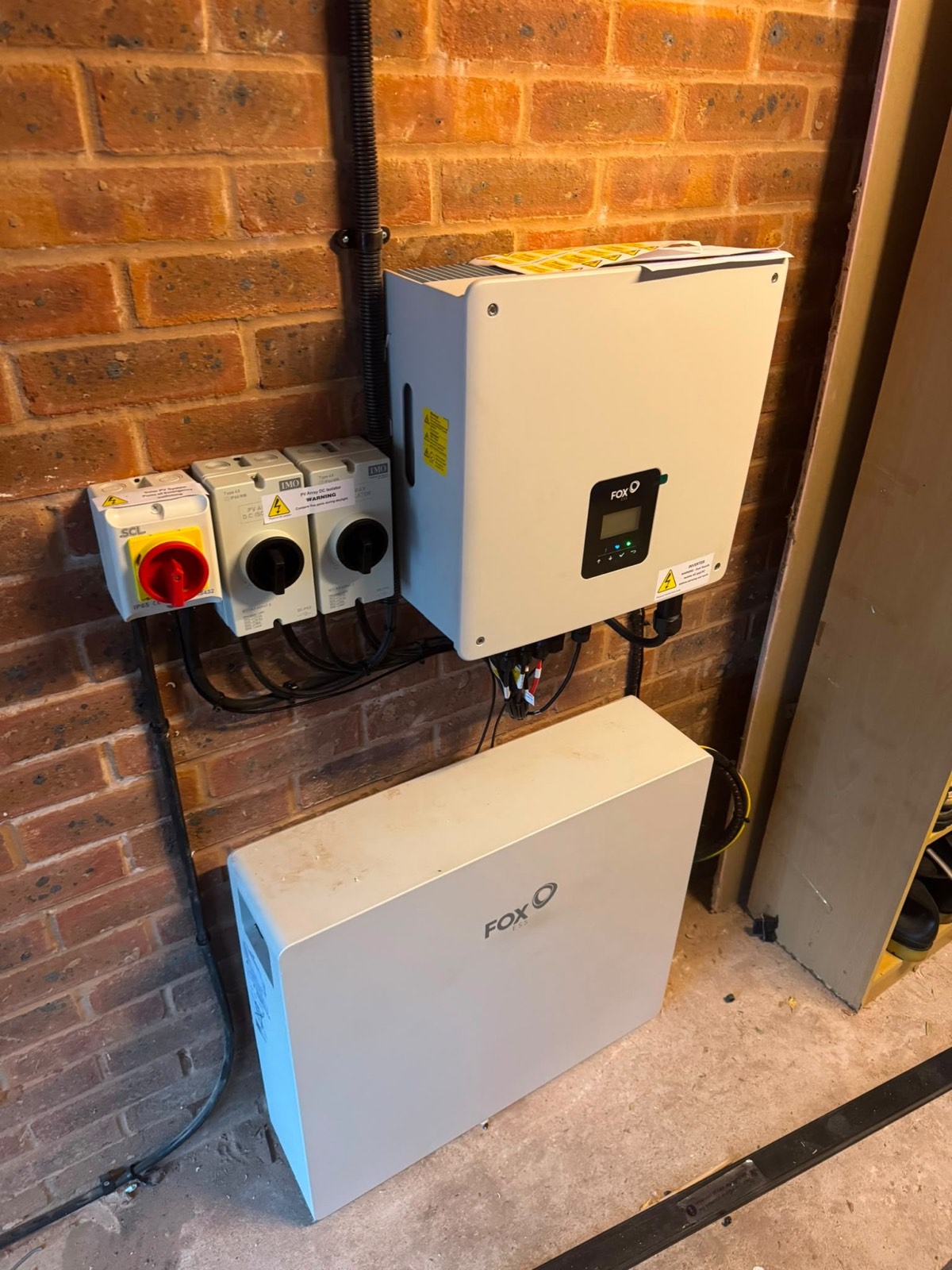
Battery storage
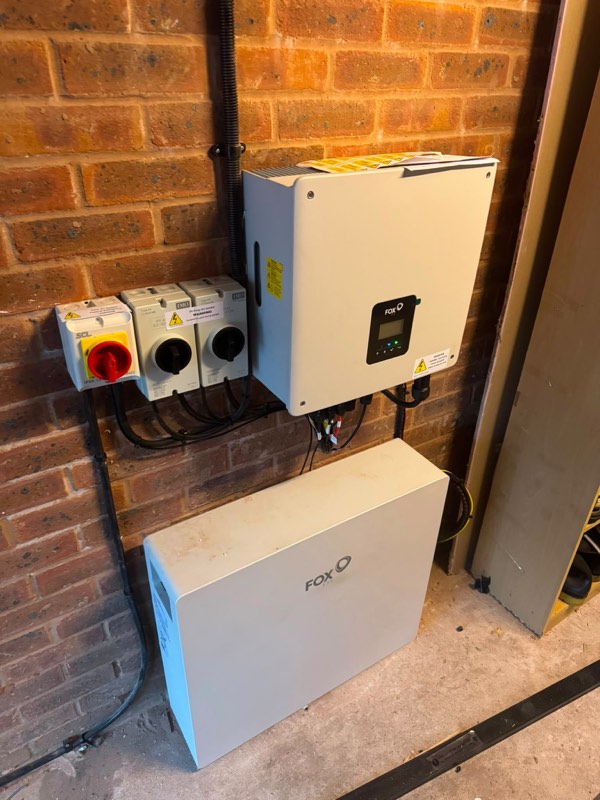
Fox ESS inverter and battery. Cable management, isolators and labelling done properly, because you are the one who has to live with it.
Location to be confirmed.
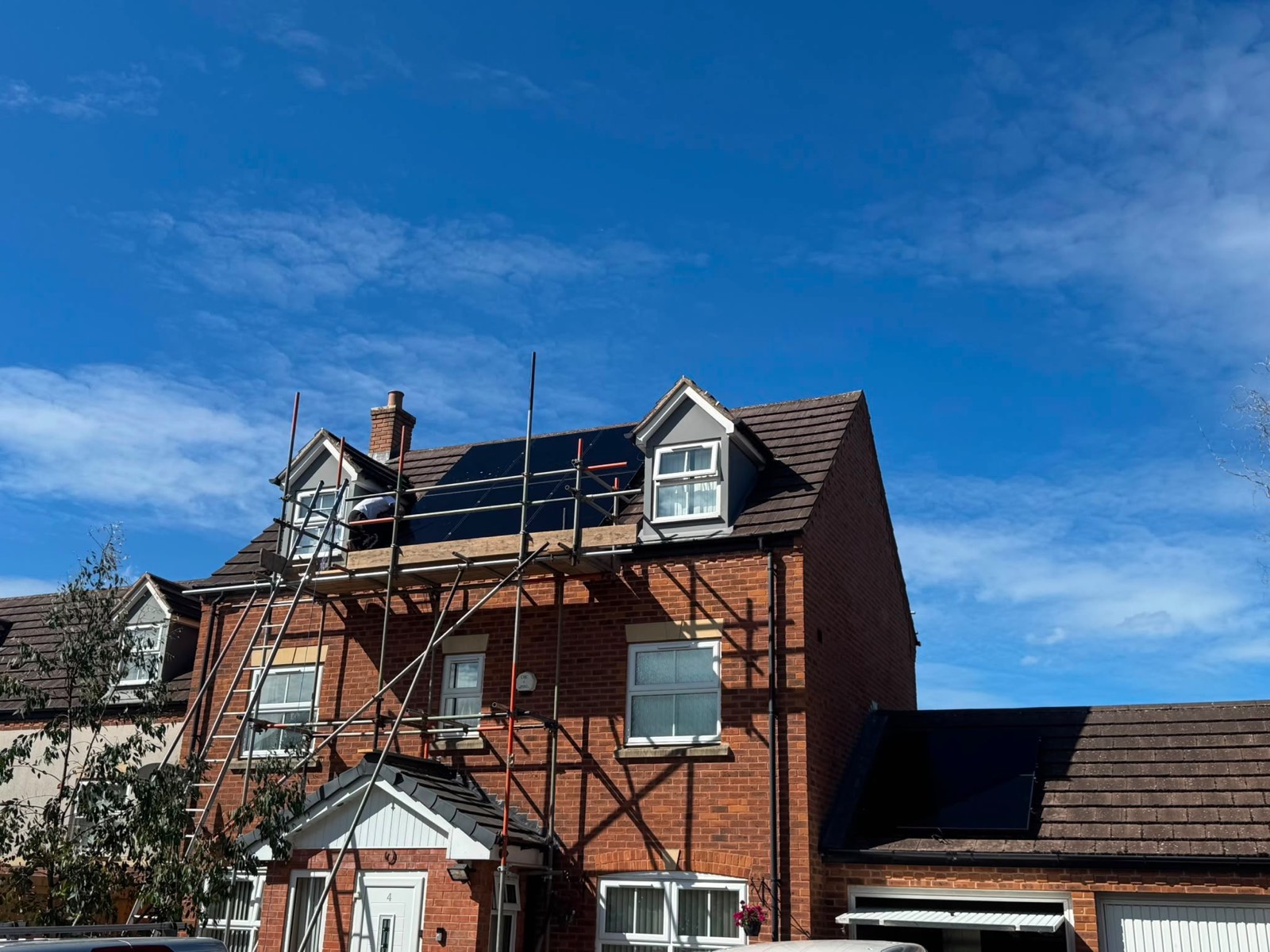
How we work
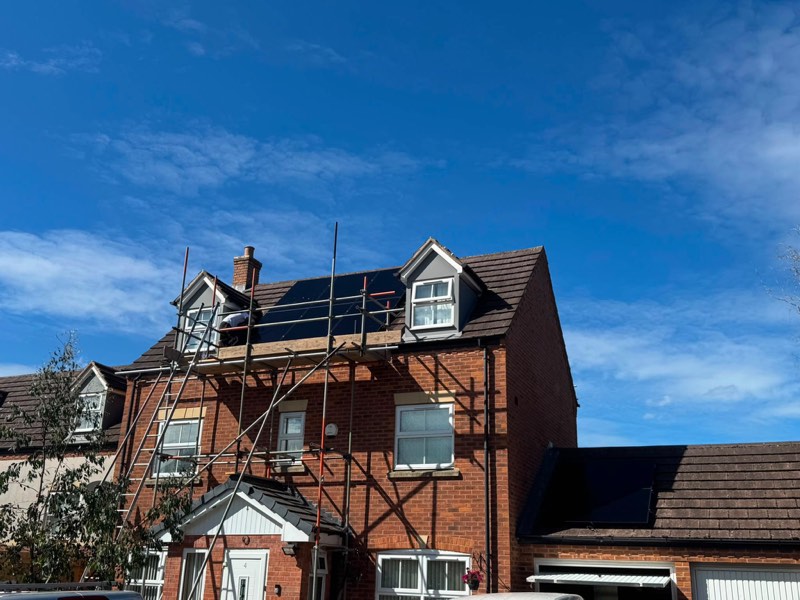
Survey, install and aftercare by the people whose names are on the About page. No call centre and no subcontractors.
Location to be confirmed.
EV charging
There is no EV charger photograph in what Matt sent, so this band has nothing genuine to run. It stays empty rather than borrowing a solar shot.
B · Editorial rows. Image and text alternate down the page, and each photo keeps its own orientation — portrait stays portrait beside the copy instead of being cropped to match its neighbour. The most readable of the three and the easiest to extend as Matt sends more photos. Calmest, least dramatic.
One home, one energy system
Most people start with panels and add storage later. Both work alone — they just do more designed as one system.
Generate your own electricity during the day and buy less of it from your supplier. We size the array around your roof — its pitch, its orientation and whatever shades it at four in the afternoon — rather than fitting you to a package.
How solar works here →
Keep what you generate instead of exporting it cheaply, and use it in the evening when electricity costs the most. The photograph is the honest test of an installer — that is what our second fix looks like.
How storage works →
Scaffold up, survey confirmed, mounting system fixed, panels on, commissioning and handover. One to two days on site for most houses, plus the scaffold going up before and coming down after.
The installation process →Charge the car on your own electricity where we can and on the cheapest overnight rate where we can't. This row stays empty until Matt sends an EV photograph — we are not putting a solar shot here and calling it an EV install.
How EV charging works →C · Portrait mosaic. A grid built on 3:4 — the shape the photographs actually are — with the one landscape shot spanning two columns as a deliberate exception. Captions sit over the image, so the gallery reads as one block rather than a row of cards. Densest of the three, and the best fit for a growing library of phone photos.
Our work
Every photograph here is one of our own installations. Nothing is stock and nothing is a render.